
Key Takeaways
- Wooden flooring creates a warm, calming foundation for bedrooms while supporting a wide range of interior styles, from minimal to design-led spaces.
- Different wood floor designs such as straight planks, herringbone, chevron, and parquet layouts influence the room’s visual flow, structure, and overall character.
- Flooring tones play a key role in shaping mood: light woods make rooms feel open, grey wood floors create a modern neutral base, and darker tones add depth and intimacy.
- Finishes like matte, satin, and super matt affect both the appearance and tactile experience of bedroom wooden flooring, influencing how the space feels over time.
- Well-designed modern bedroom flooring works in harmony with furniture, wall colours, lighting, and textiles to create a cohesive and balanced interior.
- Engineered wooden flooring has emerged as a preferred modern flooring solution, combining the natural appearance of real wood with a three-layer construction that enhances dimensional stability, and delivers long-lasting durability.
- Mikasa Floors offers engineered wooden flooring solutions that combine natural wood aesthetics, durability, and versatile designs to suit modern bedroom interiors and evolving residential needs.
A bedroom should feel calm, comfortable, and inviting. Wooden flooring helps create that atmosphere with its natural warmth and clean look, shaping how the space feels and functions. In today’s modern homes, wooden flooring is no longer just a material choice. It plays a central role in defining the mood of the bedroom, bringing together comfort underfoot, visual warmth, and a cohesive design foundation. In this article, we will explore some trending wooden flooring ideas for modern bedrooms, and understand how layout, colour, and finish come together to define the overall experience of the space.
Wooden Flooring as the Foundation of the Bedroom
Before furniture is placed or walls are styled, the floor establishes the tone of the space. It creates a base that everything else responds to; visually, spatially, and even emotionally.
Wooden flooring brings a natural sense of balance to bedrooms. It softens the environment, both in how it looks and how it feels. Unlike harder surfaces such as stone or tile, wood carries warmth that aligns naturally with the purpose of a bedroom: rest, comfort, and stillness.
This is one of the reasons modern bedroom flooring increasingly leans towards real wood. It offers continuity without visual clutter, allowing the space to feel cohesive without becoming overwhelming.
More importantly, wooden flooring adapts. Whether the room leans towards minimalism, layered textures, or design-led expression, wood supports the direction without forcing it. This flexibility makes it one of the most reliable residential flooring choices for bedrooms, where design preferences may evolve over time.
Design Ideas for Wooden Flooring in the Bedroom
1. Seamless Look
Some bedrooms are designed to feel effortless, spaces where nothing interrupts the sense of quiet.
Straight Planks are perfect in such settings. Their linearity creates a continuous visual flow, allowing the room to appear longer and more open. When paired with light wood tones such as ash or pale oak, the effect becomes even more pronounced. The space feels brighter, softer, and less confined.
A super matt or low-sheen finish enhances this further by reducing reflections and keeping the surface understated. The flooring does not compete for attention; instead, it becomes a quiet foundation that supports everything around it.
This approach to bedroom wooden flooring works particularly well in smaller rooms or interiors that prioritise minimalism. The result is a space that feels calm without trying too hard.
2. Structured Elegance
Some bedrooms benefit from a sense of rhythm, an underlying structure that adds character without overwhelming the space.
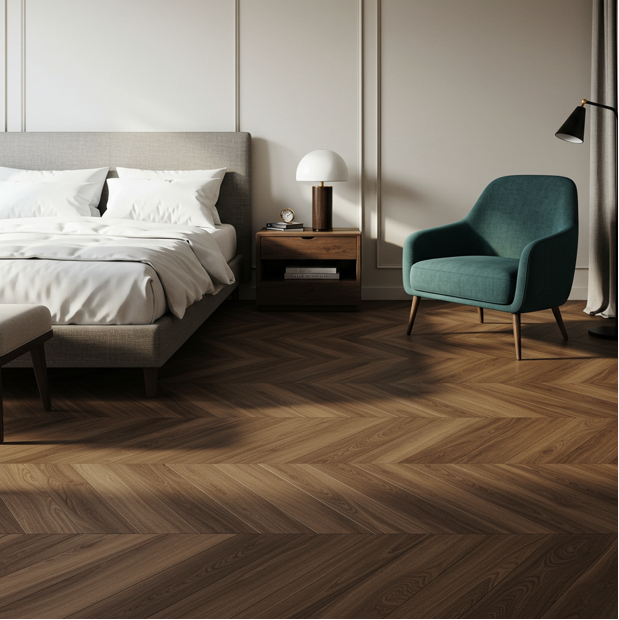
This is where patterns such as herringbone or chevron come into play. These wood floor designs introduce movement through geometry, guiding the eye across the room in a subtle, controlled manner. Unlike more decorative elements, these patterns feel integrated rather than added on. You can consider Mikasa Floor’s Herringbone and Chevron collections for inspiration.
When combined with natural oak tones or mid-range browns, the effect becomes more grounded. The warmth of the wood balances the structure of the pattern, creating a bedroom that feels refined yet comfortable.
A satin or soft finish works well in this setting, reflecting just enough light to highlight the pattern without making it appear overly polished.
This direction suits bedrooms where design clarity matters; spaces that lean towards contemporary elegance without losing warmth.
3. Statement Depth
In some bedrooms, the floor becomes more than a foundation; it becomes a defining element.
Parquet and geometric layouts bring an artistic dimension to wooden flooring. For instance, Mikasa Floor’s Parquetry collection offers patterns inspired by traditional European craftsmanship, creating visual depth that transforms the floor into a focal point.
Darker wood tones further enhance this effect. They introduce contrast, absorb light, and create a layered aesthetic that feels rich and deliberate. In larger bedrooms or spaces with ample natural light, this combination can elevate the overall design without making the room feel heavy.
The key here is balance. When flooring becomes expressive, the rest of the room benefits from restraint. Furniture, walls, and textiles work best when they complement rather than compete.
This approach to modern bedroom flooring is ideal for those who view flooring as a central design feature, something that defines the space rather than simply supporting it.
4. Contemporary Neutral
There is a growing preference for interiors that feel understated yet intentional. In such spaces, grey wood floor finishes have become a defining choice.
Grey tones introduce a muted base that allows other elements in the room to stand out. They neither warm the space excessively nor make it feel cold; instead, they create a neutral ground that adapts to different styles.
When paired with wide plank layouts, the effect becomes more expansive. Fewer joints and broader surfaces reduce visual interruption, allowing the room to feel more open and cohesive.
This direction works particularly well in modern bedroom flooring where simplicity, clarity, and adaptability are key. Grey wooden flooring allows you to experiment with furniture, fabrics, and accents without disrupting the overall harmony of the space.
The Role of Wood Flooring Tone in Defining Mood
Tone or colour plays a central role in how bedroom wooden flooring is perceived.
- Light Wood Tones: Lighter tones reflect more light, making rooms feel larger and more open. They work well in compact bedrooms or spaces that rely heavily on natural light. These tones also align with minimalist interiors, where visual lightness is essential.
- Natural Oak and Warm Browns: These offer a more balanced alternative. They bring warmth without dominating the space, making them suitable for a wide range of residential flooring applications. These shades tend to age well, maintaining their relevance even as other design elements change.
- Grey Wood Floors: As mentioned earlier, create a contemporary and adaptable base. They are particularly effective in interiors that prioritise muted palettes and clean lines.
- Darker Tones: These introduce depth and contrast. While they work best in larger or well-lit bedrooms, they can transform the space into something more intimate and layered when used thoughtfully.
In each case, colour does more than define appearance; it shapes how the room feels on a daily basis.
Also Read: Considering Light-Tone Wooden Flooring in the Bedroom? Here’s What You Should Know
Finish and Texture as Sensory Details
While design and colour define the visual direction, the finish and texture determine how the flooring is experienced. For instance, here are examples of textures and finishes:
- Brushed Texture: It introduces texture. By enhancing the grain, they create a tactile surface that feels more organic. This also makes the flooring more forgiving to everyday wear, an important consideration in residential flooring environments.
- Super Matt Finish: This has gained popularity in modern interiors for its understated look. They reduce reflection, minimise visual noise, and contribute to a calmer, more composed space.
These finishes are rarely the first thing one notices. Yet, over time, they define how the room feels underfoot and how it interacts with light, making them an essential part of the overall design.
Designing Around Wooden Flooring
A well-designed bedroom is not a collection of individual elements; it is a cohesive composition. Wooden flooring plays a central role in bringing this composition together.
Furniture works best when it relates to the floor. Matching tones can create a seamless look, while subtle contrasts add depth without breaking the harmony.
Wall colours appear different depending on the flooring beneath them. Neutral wooden flooring allows for greater flexibility, accommodating both muted palettes and bolder accents.
Lighting, both natural and artificial, significantly influences how wood is perceived. Morning light can enhance warmth, while evening lighting can deepen tones. Understanding this interaction helps avoid mismatched finishes and ensures consistency throughout the day.
Textiles, such as rugs, curtains, and upholstery, add another layer of softness. When chosen thoughtfully, they complement the flooring rather than compete with it, reinforcing the overall balance of the space.
When Simplicity Defines the Space
Not every bedroom needs complexity. In many cases, simplicity creates the most lasting impact.
A classic wooden floor, laid in straight planks with light tones and a minimal finish, can transform a room into a space of quiet clarity. With fewer visual interruptions, the focus shifts to how the space feels rather than how it looks. This approach aligns with the idea that good design does not need to be explained. It simply works.
When Flooring Becomes the Centrepiece
On the other end of the spectrum, flooring can take on a more expressive role.
Patterned layouts, deeper tones, and textured finishes create a strong visual presence. In such spaces, the floor becomes the element that defines the room’s identity.
The key lies in restraint elsewhere. When the flooring leads, other elements step back, allowing the design to remain balanced rather than overwhelming. This interplay between expression and restraint is what defines well-executed modern bedroom flooring.
Engineered Wood Flooring: The Evolving Material for Modern Living
As expectations from flooring continue to evolve, materials have adapted to meet both aesthetic and practical needs. Engineered wooden flooring has become a preferred choice in modern homes. Designed with three-layers, featuring a real wood top layer, a stabilising pine wood core, and a balancing pine veneer layer, it offers better dimensional stability under varying temperature and humidity conditions, making it well-suited for diverse residential flooring environments.
Engineered wood flooring also supports flexible wood floor installation methods, allowing it to be used across different subfloors without compromising performance. This makes it a practical option for both new constructions and renovations.
At the same time, it retains the appearance of natural wood, ensuring that design integrity is not compromised. This balance between aesthetics and durability positions engineered wood as one of the most reliable flooring solutions available today.
A Quiet Foundation That Lasts
Bedrooms are deeply personal spaces. They are not just designed, they are lived in, experienced, and shaped over time.
Wooden flooring supports this journey without imposing itself. It adapts to changes, complements evolving interiors, and continues to feel relevant long after trends shift. The right bedroom wooden flooring does not stand out immediately. Instead, it settles into the space, becoming a part of how the room feels every day. And in the end, that is what good design does. It does not demand attention. It simply belongs.
About Mikasa Floors
Mikasa Floors, from Greenlam Industries, offers engineered wooden flooring and staircase solutions designed for modern residential spaces. Each plank combines natural wood aesthetics with advanced engineering to deliver stability, durability, and ease of installation. With a wide selection of wood floor designs, including contemporary grey wood floor finishes, Mikasa supports diverse interior styles. Through our design philosophy, you can reimagine flooring as a central element of your bedroom design. Explore our flooring solutions and discover our latest collection here. For inquiries, call 1800-833-0004, email info@mikasafloors.com, or visit our contact form.