
Key Takeaways
|
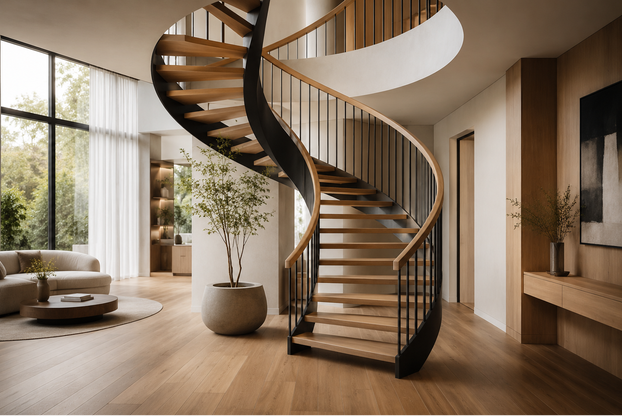
Once viewed primarily as a space-saving solution, spiral staircases have evolved into a defining feature in contemporary homes. More than simply connecting two levels, they have the ability to anchor a space and become one of its most distinctive design elements. From warm wood finishes and contrasting material pairings to open risers and well-placed lighting, there are plenty of ways to elevate the design of spiral staircases. In this article, we’ll explore five spiral staircase design ideas for contemporary homes.
Turn the Spiral Staircase into a Sculptural Centrepiece
A spiral staircase has the ability to shape the entire interior, not just connect two floors. Its flowing form naturally draws attention, making it a strong architectural feature within a home. Rather than designing the space around furniture or décor, let the staircase become the starting point and allow the rest of the interior to support it.
Where it creates the greatest impact
- Double-height entrance foyers
- Open-plan living spaces
- Double-height living rooms
- Homes with minimal architectural detailing
A sculptural staircase naturally becomes the focal point, so the surrounding interior works best when it complements the form instead of competing with it.
Design ideas to explore
- Position a spiral staircase for the living room where it remains visible from multiple angles rather than hiding it behind a wall.
- Keep surrounding walls clean so the curves become the strongest visual element.
- Choose low-profile furniture around the staircase to maintain clear sightlines.
- Keep lighting understated so the sculptural form remains the focus.
- Repeat curved forms in furniture or architectural details to reinforce the staircase’s shape.
What surrounds a staircase is just as important as the staircase itself. A restrained material palette, clean architectural lines and balanced proportions allow the form to become the focal point without relying on decorative detailing.
Bring Warmth with Natural Wood Tones
The material you choose shapes the overall look of a spiral staircase. While glass and metal create a cooler, more industrial look, a wooden staircase adds warmth, natural texture and depth. The grain of real wood also adds texture and visual interest, allowing the staircase to stand out without relying on decorative detailing.
Wood tones to explore
A lighter wood finish works well if the aim is to create a bright, open interior.
- Light oak suits Scandinavian-inspired homes with clean lines and a softer palette.
Looking for something richer?
- Walnut introduces deeper brown tones that pair beautifully with earthy colours and layered materials.
The wood tone should also work with the rest of the interior.
- Match the staircase with engineered wood flooring to create a seamless transition between levels.
- Choose similar wood tones instead of identical shades for a more natural look.
- Keep surrounding walls and finishes neutral so the wood grain remains the highlight.
For an even more cohesive interior, extend the same material palette beyond the staircase. Mikasa Floors offers coordinated engineered wood flooring and wooden staircase solutions, making it easier to create visual continuity between the staircase and adjoining spaces without relying on identical finishes.
Also Read:Engineered Wood Spiral Staircases: A Smarter Alternative to Metal
Pair Wood with Glass or Metal for Contrast
The materials surrounding a spiral staircase influence how prominent it becomes within the interior. While wood remains the dominant element, introducing glass or metal adds contrast, allowing the curves, grain and craftsmanship of the staircase to stand out even more. The goal is not to use multiple materials for the sake of it, but to let each one play a distinct role.
Material combinations to explore
- Wood + Glass
Pair a wooden staircase with glass balustrades to keep the design visually open while allowing natural light to pass through. The transparency highlights the curves and grain of the timber instead of interrupting them, making this combination particularly effective in compact homes and double-height spaces.
- Wood + Black Metal
Combine timber with slim black metal railings to introduce clean definition around the staircase. The contrast frames the curves of a modern spiral staircase while allowing the wood to remain the dominant design feature.
- Wood + Bronze
Introduce bronze railings, handrails or hardware to add subtle warmth without overwhelming the staircase. This combination works particularly well with deeper wood tones, creating a refined palette that remains timeless.
The strongest material palettes rely on balance rather than contrast alone. Let the wooden spiral staircase remain the focal point, while glass or metal adds structure, definition and visual balance around it.
Keep the Design Light with Open Risers
Open risers suit contemporary homes where a spiral staircase needs to look light rather than solid. Leaving space between each step reduces visual weight while keeping the curved form visible, making the staircase easier to integrate into open, uncluttered interiors.
Where this design works well
- Compact living spaces
- Double-height interiors
- Open-plan layouts
- Minimal interiors with clean architectural lines
The open construction already creates visual lightness, so the surrounding design does not need much detailing.
Design ideas to explore
- Pair open risers with slim balustrades to keep the staircase visually light from different viewpoints.
- Place the staircase where it receives natural light, allowing daylight to pass between the steps.
- Keep the area around the staircase uncluttered so the open structure remains visible.
- Use open risers where a solid staircase would interrupt sightlines between adjoining spaces.
For homeowners who prefer this lighter approach, Mikasa Floors’ contemporary staircase solution features staircases without risers, offering an option for interiors where an open, streamlined staircase design is preferred.
Use Lighting to Highlight Every Curve
The right lighting can bring out the curves, steps and wood grain of a spiral staircase, making it a stronger feature within the room. Instead of treating lighting as an afterthought, use different placements to highlight specific parts of the staircase and create a more layered interior.
Lighting ideas to explore
- Pendant above the staircase: Hang a statement pendant over the centre of the staircase to emphasise its height and draw attention to the spiral form, particularly in a double-height space.
- Lighting beneath the treads: Conceal lights beneath individual steps to trace the curve as the staircase rises without adding bulky fixtures.
- Wall lighting beside the staircase: Use focused wall lights along the staircase to highlight the timber surface and create gentle shadows around the curves.
- Natural light from nearby windows: Position the staircase near a window where daylight can fall across the steps, bringing out the grain and changing the way the wood appears throughout the day.
Keep the fixtures simple when the staircase itself is the statement. The lighting should highlight its form rather than compete with it.
Also Read:Spiral Staircases as Architectural Anchors in Duplex Homes
About Mikasa Floors
At Mikasa Floors, we bring together engineered wood flooring and staircase solutions with natural wood aesthetics, precise craftsmanship and long-term performance. Our range includes long plank flooring, engineered herringbone flooring and factory-finished wooden staircases, along with coordinated accessories that help create a consistent finish across the space.
Our flooring uses multi-layer engineered construction, with options such as brushed textures, matt lacquer finishes and precision-finished edges. Our factory-finished staircase solutions extend the same attention to detail to stair treads, risers and other components, while a range of wood species, finishes and textures offers flexibility across different interior styles.
To learn more about our flooring and staircase solutions, call us on 1800 833 0004, email us at info@mikasafloors.com, or visit our contact page.