
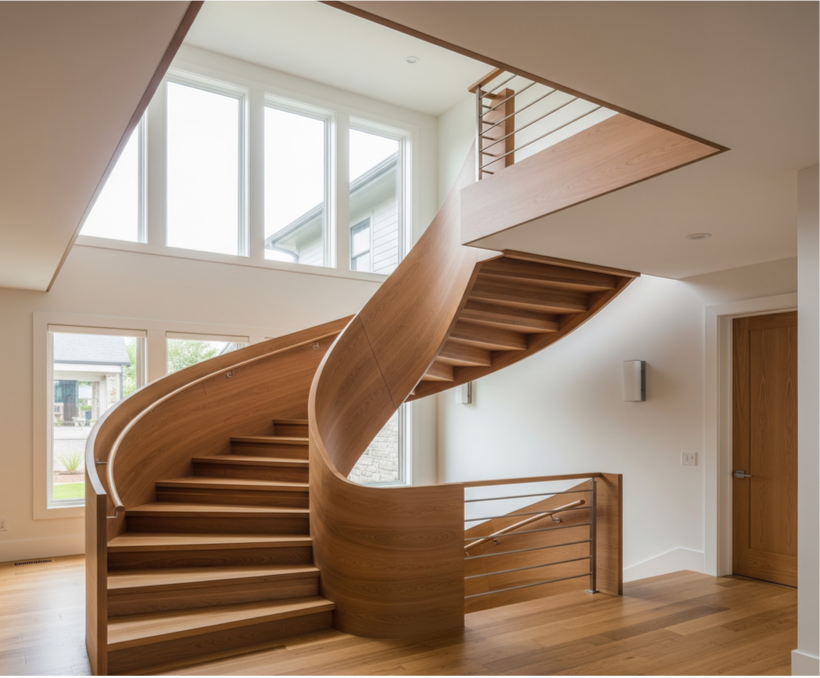
A spiral staircase is a central design feature, shaping both movement and visual flow within modern interiors. It draws attention, connects different levels with a minimal footprint, and often becomes a defining element within the space. That said, the choice of material plays a key role in how well spiral staircases integrate with the overall interior. Metal spiral staircases, while practical, can feel rigid and out of place in residential settings, especially when compared to the warmth and visual continuity offered by engineered wood. In this article, we will explore why spiral staircases continue to remain relevant in residential spaces, where metal staircases fall short, and why engineered wood stairs are a better choice.
Also Read: Spiral Staircases as Architectural Anchors in Duplex Homes
Why Spiral Staircases Remain Relevant in Modern Homes
The spiral staircase continues to hold its place in modern interiors for one simple reason: design that works as hard as it looks. Its sculptural form introduces a sense of movement and fluidity into otherwise linear spaces, turning a functional element into a visual focal point.
In contemporary homes, where clean lines and open layouts dominate, a spiral staircase breaks monotony. Its circular geometry adds depth, rhythm, and character without overwhelming the space. Whether crafted in metal, wood, or a combination of materials, it creates a distinct architectural statement that complements both minimal and detailed interiors.
Beyond its visual appeal, the spiral staircase delivers practical efficiency. In homes where space is limited, such as urban apartments or duplex layouts, it offers a compact footprint while maintaining vertical connectivity. Unlike traditional staircases that require significant floor area, spiral staircases rise within a tight radius, making them ideal for smaller homes, terraces, or secondary access points.
This balance of form and function makes spiral staircases particularly relevant in Indian homes, where space planning plays a critical role. From compact apartments to expansive villas, they adapt seamlessly across layouts, serving both aesthetic and practical needs.
By combining design impact with spatial efficiency, spiral staircases continue to remain a consistent and thoughtful choice in modern homes.
The Limitations of Metal Spiral Staircases
Metal spiral staircases have long been used for their strength and compact design. They work well in industrial and commercial environments where durability takes priority. In residential spaces, expectations shift. Comfort, aesthetics, and ease of use become equally important, and this is where metal begins to show its limitations.
1. Cold and Industrial Appearance
Metal spiral staircases often carry a stark, industrial look that does not align with the warmth expected in home interiors. Even with coatings or paint finishes, the material can feel rigid and visually disconnected from softer elements such as wood, fabric, or stone.
2. Limited Comfort Underfoot
Metal spiral steps tend to feel hard and unforgiving underfoot. In everyday use, this affects comfort, especially in homes where the staircase is used frequently.
3. Noise and Vibration
Frequent use can lead to noticeable noise and slight vibrations. In quieter home environments, this becomes more apparent and can disrupt the overall sense of calm within the space.
4. Slippery Surface Concerns
Metal treads can become slippery, particularly in humid conditions or when exposed to moisture. This raises usability and safety concerns in residential settings.
5. Maintenance and Wear
Over time, metal is prone to scratches, surface wear, and in certain conditions, rust. Maintaining its appearance and performance often requires regular upkeep.
6.Poor Integration with Interior Design
Metal does not always blend seamlessly with evolving interior styles. As homes move towards cohesive, material-led design, metal spiral staircases can feel out of place rather than integrated.
Metal does not always blend seamlessly with evolving interior styles. As homes move towards cohesive, material-led design, metal spiral staircases can feel out of place rather than integrated.
The Shift Towards Wooden Spiral Staircases
As interior design continues to prioritise comfort and cohesion, the demand for wooden staircase solutions has grown significantly. Wood introduces a natural quality that complements a wide range of materials, from stone and fabric to glass and metal accents.
A wooden spiral staircase offers a more balanced visual presence. It softens the structure of the staircase while maintaining its form. This makes it easier to integrate into living spaces without creating visual disruption.
Tactile comfort also plays a role. Wooden steps feel warmer and more natural underfoot, improving the everyday experience of using the staircase. This becomes particularly important in homes where the staircase is used frequently.
From contemporary homes to more traditional interiors, wooden spiral staircase designs align better with evolving preferences, making them a more suitable choice for residential settings.
What Makes Engineered Wood a Practical Upgrade
As interior preferences move towards materials that balance performance with aesthetics, engineered wood has emerged as a reliable choice for staircase applications. It retains the natural appeal of wood while addressing many of the limitations associated with both solid wood and metal, making it well-suited for modern spiral staircases.
1. Enhanced Structural Stability
Engineered wood is built using multiple layers, designed to improve strength and minimise movement. This construction reduces the risk of expansion and contraction, ensuring long-term dimensional stability.
2. Better Stability Across Changing Conditions
Engineered wood is designed to offer improved dimensional stability across changes in temperature and humidity. Its layered construction helps reduce the impact of environmental fluctuations, making it a more reliable choice for everyday indoor use.
3. Consistent Finish and Appearance
The layered construction allows for uniformity in texture and finish. Each step maintains a consistent look over time, contributing to a more cohesive staircase design.
4. Suitable for High-Traffic Use
Staircases experience regular use, making durability essential. Engineered wood provides the required strength to handle daily footfall without compromising on appearance.
5.Improved Comfort Compared to Metal
Engineered wood offers a warmer and more comfortable surface underfoot compared to metal. This enhances everyday usability, especially in residential settings.
6. Low Maintenance
Engineered wood is designed for ease of maintenance while retaining its natural look and finish. It requires minimal effort to clean and care for, making it well-suited for everyday use. With stable surface performance and reduced susceptibility to visible wear, it supports a neat and consistent appearance over time.
Cost vs Long-Term Value
At first glance, upgrading to engineered wood may seem like an additional expense. However, when viewed over time, it offers strong value.
Replacing only the treads instead of the entire staircase reduces initial costs. It also avoids the disruption associated with complete reconstruction. Maintenance requirements are generally lower compared to metal, especially when it comes to issues such as rust or surface wear.
From an aesthetic perspective, a wooden spiral staircase adds perceived value to the home. It enhances the overall look of the space, which can be beneficial in the long term, particularly for resale or rental considerations.
Durability also plays a role in long-term savings. Engineered wood maintains its structure and finish with minimal upkeep, making it a reliable choice for everyday use.
Best Use Cases for Engineered Wood Spiral Staircases
Engineered wood spiral staircases are well-suited to a variety of residential applications.
In duplex apartments, they provide an efficient connection between levels without occupying excessive space. In villas and independent homes, they can act as both a functional element and a design feature.
They can work well for indoor connections between living areas, especially where visual continuity across levels is important. In compact urban homes, spiral staircases with engineered wood treads can offer both practicality and design value when planned with the right dimensions and safety considerations.
It is important to note that engineered wood is best suited for indoor applications, as it performs like natural wood and may not be ideal for prolonged outdoor exposure.
Maintenance and Care
Maintaining engineered wood staircases is relatively straightforward. Regular cleaning with a dry or slightly damp cloth helps remove dust and surface debris. Harsh chemicals should be avoided to preserve the finish.
Engineered wood performs better than solid wood in humid conditions; however, extended exposure to water can still cause damage. Using protective finishes and ensuring proper installation can further enhance durability.
Periodic inspection of the steps ensures that they remain secure and stable. With basic care, engineered wood treads can maintain their appearance and performance for years.
Also Read: Spiral Staircases: Types, Design Considerations, and the Benefits of Engineered Wood
About Mikasa Floors
Mikasa Floors offers a complete range of engineered wood flooring and wooden staircase solutions designed to bring consistency, performance, and refined aesthetics to modern interiors. Built with precision, these solutions create a seamless flow across floors, skirtings, and staircases, ensuring a cohesive material language throughout the space. The flooring range delivers durability, stability, and a uniform finish suited for everyday living, while the wooden staircase solutions are available in both classic designs with risers and contemporary open-riser formats. Together, they allow for a unified design approach across different levels of the home.
By combining the natural appeal of wood with engineered performance, Mikasa Floors enables homeowners and designers to create spaces that feel connected, balanced, and built to last. For product inquiries, call 1800-833-0004, email info@mikasafloors.com, or visit our contact form.