
Key Takeaways
|
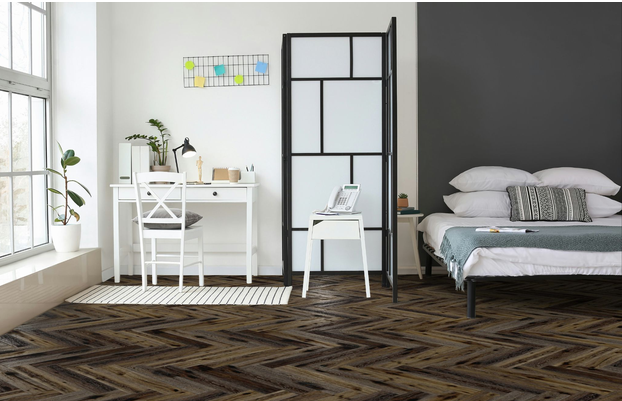
In recent years, an increasing number of people are getting inclined towards calmer and more balanced interiors, which has steered designers toward Japandi’s quiet union of minimalism and comfort. While the style is often associated with lighter wood tones and soft neutral palettes, darker floors are often used to create a more layered and contemporary interpretation of the Japandi design philosophy. Black wood flooring brings depth, contrast, and gentle visual movement that feels warm and understated rather than overtly dramatic, especially when used in herringbone layouts. The interplay of darker floors with muted textures, natural materials, and softened lighting helps create spaces that feel grounded, cohesive, and quietly refined.
In this article, we’ll explore how black wood herringbone flooring complements Japandi interiors, which patterns and finishes suit the style best, and the material pairings that help create balanced and contemporary living spaces.
Also Read: Light vs Dark Wood Flooring: Which Is Right for Your Space?
Understanding the Japandi Interior Aesthetic
Japandi interiors emerged from the coming together of two design philosophies: the functionality and coziness of Scandinavian spaces and the restraint and simplicity of traditional Japanese interiors. While Scandinavian design evolved around comfort, light, and everyday practicality, Japanese interiors were shaped by principles such as wabi-sabi, where simplicity, craftsmanship, and the beauty of natural imperfection became central to the space. Over time, these ideas merged into an aesthetic that feels calm, tactile, and quietly refined rather than overly decorative.
What defines Japandi interiors most is not the absence of detail, but the careful layering of materials, textures, and proportions to create visual balance without excess.
Some of the defining characteristics of Japandi interiors include:
- Muted and nature-inspired colour palettes
- Minimal layouts with functional furniture
- Layered textures instead of decorative clutter
- Natural materials such as wood, stone, and linen
- Softer lighting with understated detailing
- Clean architectural lines balanced with warmth
In recent years, Japandi interiors have also become increasingly popular in contemporary Indian homes, particularly across urban apartments and architect-designed residences where homeowners are moving towards quieter and more balanced living environments. Within these spaces, materials such as textured walls, natural fabrics, ceramics, and wooden flooring help create interiors that feel grounded, cohesive, and connected to natural materiality while still maintaining the simplicity that defines the aesthetic.
Why Black Wood Flooring Works in Japandi Spaces
One of the reasons Japandi interiors feel so calm and visually balanced is because the spaces are built with very few dominant elements. Furniture remains low, palettes stay restrained, and surfaces are intentionally uncluttered. Within this kind of minimal setting, the flooring begins to play a much larger visual role than it would in more layered or decorative interiors. This is where black wood flooring works particularly well within Japandi spaces.
Some of the reasons black wooden flooring complements Japandi spaces so naturally include:
- Darker floors visually lower the centre of gravity of the room, helping the interior feel calmer and more grounded
- In low-profile Japandi layouts, darker flooring strengthens horizontal continuity across the space rather than visually fragmenting it
- Minimal interiors often benefit from one stronger grounding surface to prevent the space from feeling visually sparse
- Deeper wood tones allow tactile materials such as limewash walls, linen fabrics, stone surfaces, and textured ceramics to feel more defined
- Open Japandi layouts benefit from stronger floor definition because they rely on fewer visual interruptions and decorative layers.
Within Japandi spaces, darker wooden flooring shifts the atmosphere towards a warmer and more architectural interpretation of minimalism while still retaining the simplicity central to the aesthetic.
The Role of Herringbone Patterns in Japandi Interiors
In Japandi spaces, the floor is often one of the largest uninterrupted surfaces within the interior, which makes pattern an important part of how the space is experienced visually. This is where herringbone layouts work particularly well. When combined with darker wooden flooring, they introduce movement, structure, and layering into the interior without taking away from the restraint that defines Japandi design. Instead of relying on decorative detailing, the space begins to feel richer through the rhythm and direction created across the floor itself.
Single Herringbone Pattern
The single herringbone layout follows the classic zigzag arrangement, creating a continuous and balanced flow across the floor.
Within Japandi interiors, this pattern works especially well because it:
- Keeps open spaces visually connected
- Adds movement without making the interior feel busy
- Works naturally with softer palettes and low furniture
- Allows darker floor tones to feel more fluid across the room
This layout often suits living spaces where the intention is to maintain simplicity while still introducing subtle visual detail.
Diagonal Herringbone Pattern
In diagonal herringbone layouts, the pattern runs at an angle rather than following straight wall lines. This changes how the eye moves through the room and introduces a softer sense of direction across the space.
In Japandi interiors, diagonal layouts help:
- Reduce the rigidity of highly linear spaces
- Make compact rooms feel more expansive
- Create softer visual movement across black wood flooring
- Bring a more architectural feel into minimalist interiors
They work particularly well in spaces with natural light, where shifting daylight highlights the movement within the pattern throughout the day.
Double Herringbone Pattern
Double herringbone layouts use paired planks instead of single strips, creating a fuller and slightly more structured interpretation of the traditional herringbone format.
This pattern is often explored in larger Japandi interiors because it:
- Introduces a more layered floor composition
- Adds texture without relying on decorative surfaces
- Works well with contemporary wood floor designs focused on material depth
- Helps larger open spaces feel visually anchored
The pattern feels especially effective in darker wood tones, where the repeated geometry creates depth more subtly.
Brick and Basket Patterns
Brick and basket-inspired layouts bring a more geometric and grid-like interpretation to patterned flooring. Compared to flowing herringbone layouts, these patterns feel slightly more structured and architectural.
Within Japandi spaces, they help:
- Introduce cleaner geometric definition
- Pair naturally with restrained material palettes
- Create subtle zoning within open-plan interiors
- Balance simplicity with stronger visual structure
When paired with darker wood tones and muted textures, these layouts help Japandi interiors feel more intentional and spatially composed without appearing overly decorative.
Curated Black Wood Herringbone Styles for Japandi Spaces
At Mikasa Floors, our Pristine Herringbone collection includes a range of darker surfaces that work naturally within Japandi interiors. From smoked tones to deeper stained finishes, these herringbone layouts are designed to bring warmth, structure, and visual depth into contemporary spaces while still maintaining the restraint associated with Japandi design. Crafted with brushed textures, matt lacquer finishes, and backed by a 30-year residential warranty, our engineered wood flooring combines refined aesthetics with long-term performance.
Oak Noir
Oak Noir is one of our darkest herringbone surfaces within the Pristine collection, making it particularly suited to Japandi interiors that lean towards a more architectural and contrast-led aesthetic. The brushed texture prevents the surface from feeling visually flat, while the matt lacquer finish softens how light interacts with the floor throughout the day. Within minimalist interiors, this black wood flooring helps establish a stronger visual foundation without taking away from the calm restraint that defines Japandi spaces.
Oak Fume
Oak Fume introduces a smoked tonal finish that feels softer and more atmospheric than a traditionally dark stained floor. Within Japandi interiors, this creates a more gradual transition between the flooring and surrounding neutral palettes, allowing the herringbone pattern to feel integrated rather than overly pronounced. The brushed texture also gives these darker wood floor designs a more natural and tactile surface character, which aligns well with Japandi’s emphasis on material warmth and understated detailing.
Oak Smokehouse
Oak Smokehouse combines deeper smoked tones with a classic herringbone arrangement, creating wooden flooring that feels visually grounded while still retaining a softer sense of movement across the space. The finish works particularly well in larger Japandi layouts where the floor needs to introduce structure without making the interior feel visually heavy. Its brushed surface texture also allows the natural grain variation to remain visible, helping the flooring feel more organic within calmer and more restrained interiors.
Oak Char
Oak Char brings a richer stained appearance into the Pristine Herringbone collection, making it particularly effective within Japandi spaces that favour stronger definition and cleaner architectural lines. The darker finish creates clearer spatial framing across open layouts, especially in interiors with low furniture compositions and minimal visual interruptions. Within contemporary settings, this black wood flooring helps create a more composed and visually anchored environment while still maintaining the warmth associated with natural wood surfaces.
Noce Ember
Noce Ember introduces slightly warmer undertones into darker herringbone flooring, making it well suited to Japandi interiors that move away from cooler monochromatic palettes. The surface creates a softer relationship between darker floors and muted neutral surroundings, allowing the interior to feel layered without feeling overly contrasted. Within calmer residential spaces, these richer wood floor designs help create a more relaxed and understated atmosphere while still retaining the depth associated with darker flooring tones.
Also Read: 5 Impactful Wood Floor Designs for Your Space
Layering Japandi Spaces Around Black Wood Flooring
In Japandi interiors, the relationship between materials matters just as much as the furniture or layout itself. Once darker wooden flooring becomes part of the palette, the surrounding surfaces help determine whether the space feels soft and cohesive or visually disconnected. The focus is usually on creating smoother material transitions and allowing textures to interact more naturally across the room.
Some material combinations that work particularly well with black wood flooring in Japandi interiors include:
- Pair limewash or textured plaster walls with darker floors to introduce softer tonal variation across the interior
- Use linen upholstery and muted woven fabrics to balance the visual density of deeper floor tones, especially in calmer living spaces
- Incorporate travertine, textured stone, or matte ceramics to bring warmth and natural irregularity into the material palette
- Layer lighter oak or ash furniture against darker flooring to create a more balanced visual composition without relying on stark contrast
- Opt for warmer ambient lighting, as it helps highlight the grain movement and brushed textures within darker floor surfaces
- Use larger rugs with understated textures to soften expansive herringbone layouts while still allowing sections of the pattern to remain visible
- Introduce handcrafted finishes and subtly imperfect textures to prevent the interior from feeling overly polished or rigid
About Mikasa Floors
At Mikasa Floors, we offer premium engineered wood flooring solutions designed to bring together natural wood aesthetics, refined craftsmanship, and long-term performance for contemporary interiors. Our collections include long plank flooring, engineered herringbone patterns, factory-finished wooden staircases, and coordinated flooring accessories designed to create more cohesive residential spaces. With a wide range of finishes, textures, and wood floor designs, we help homeowners and designers shape interiors that feel warm, balanced, and architecturally refined.
Our flooring solutions are crafted using multi-layer engineered constructions, brushed surface textures, matt lacquer finishes, and precision-finished edges to ensure both visual appeal and structural stability. We also offer the PlankLoc® glueless installation system for cleaner and more seamless installations across modern homes.
To help visualise flooring choices more confidently, our Visualiser allows you to explore different flooring tones and layouts within realistic interior settings before making a selection. To learn more about our collections, you can call us at 1800 833 0004, email us at info@mikasafloors.com, or visit our contact us page.