
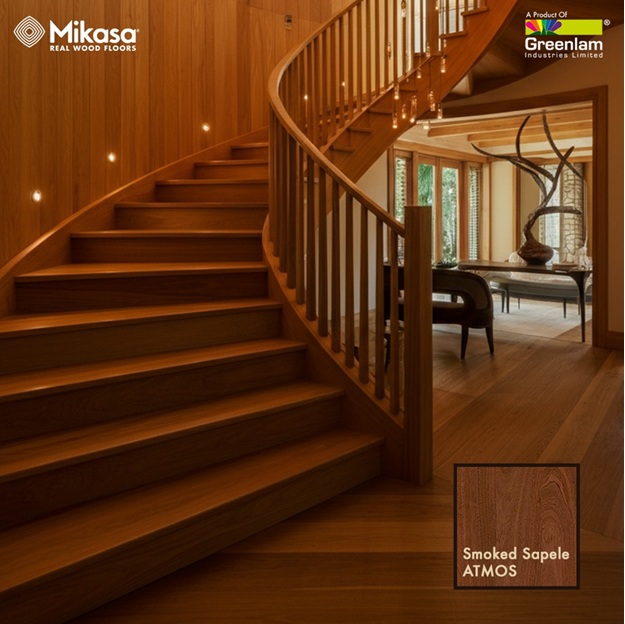
Spiral staircases have long been a distinctive architectural choice, valued for their compact footprint and ability to adapt seamlessly to modern layouts. From duplex apartments and villas to design-led interiors, spiral staircases not only address the need for space optimisation, they also make a strong visual statement. This article explores what spiral staircases are, how they function, and the different types available today. It also examines why engineered wood has become a preferred material for contemporary spiral staircase designs, along with key design considerations, common planning pitfalls, and installation insights to help homeowners and designers make informed decisions.
Also Read: Mikasa Wooden Flooring & Staircase Designs: A Perfect Match for Modern Interiors
What is a Spiral Staircase?
A spiral staircase is a stair system that ascends vertically around a central axis or support column. Unlike straight or L-shaped staircases, spiral stairways rotate upward in a compact circular form, allowing access between floors while occupying minimal floor space.
Each step of a spiral staircase radiates from the centre and gradually rises as it turns. This configuration makes spiral staircases particularly suitable for areas where space is limited or where the staircase itself is intended to act as a sculptural design element.
How Spiral Stairways Work
The structure of a spiral staircase is both simple and efficient. A central pole or core provides the primary load-bearing support, while the steps are fixed around it in a helical arrangement. Handrails and balusters provide safety and stability, while the outer edge of the staircase defines its diameter and walking comfort.
In modern spiral staircase designs, especially those made with engineered wood, precision manufacturing ensures consistent step dimensions, balanced load distribution, and smooth transitions between levels. This allows spiral stairways to meet contemporary safety standards while retaining a light, open appearance.
Why Spiral Staircases Are a Popular Choice in Modern Homes
The growing popularity of spiral staircases is driven by changing lifestyle needs and evolving interior design trends. Homeowners today seek solutions that maximise usable space without sacrificing visual appeal.
Spiral staircases are popular because they:
- Occupy significantly less floor area than traditional staircases
- Introduce a strong architectural focal point
- Work well in both compact homes and large, open-plan layouts
- Adapt easily to modern, minimalist, or warm natural interiors
When executed in engineered wood, spiral stairways add a tactile and inviting quality that complements contemporary living spaces.
Types of Spiral Staircases
Spiral staircases can be classified in several ways, depending on material, construction, design, and location.
1. Material-Based Types
- Wooden Spiral Staircase: A wooden spiral staircase brings warmth, character, and timeless appeal, but is expensive and high-maintenance.
- Engineered Wood Staircase: Engineered wood spiral steps offer refined finishes and the natural beauty of wood with better dimensional stability, and in a cost-effective price range.
- Metal Spiral Staircase: Metal spiral staircases are known for their strength and industrial aesthetic. While durable, they can feel cold or rigid in residential spaces when used alone.
- Glass & Steel Spiral Staircase: These designs create a light, modern look and are often used in high-end contemporary settings. However, they require careful maintenance and may lack the warmth many homeowners seek.
2. Construction-Based Types
- Modular Spiral Staircase: Modular systems are pre-engineered and assembled on-site. They offer quicker installation and predictable performance, making them suitable for residential use.
- Freestanding Spiral Staircase: These staircases rely on their own structure without additional wall support, making them visually striking and ideal for open spaces.
- Cantilevered Spiral Staircase: Cantilevered designs create a floating effect, where steps appear unsupported. These require precise engineering and are typically used in premium architectural projects.
3. Design Variations
- Open-Riser Spiral Staircase: Open risers create a lighter, more contemporary look by allowing light to pass through the steps. They are popular in modern wooden staircase
- Closed-Riser Spiral Staircase: Closed risers provide a more traditional appearance and can feel safer for families with children.
Benefits of Choosing Engineered Wood Spiral Staircase
In contemporary architecture, materials are chosen not just for appearance but for how intelligently they perform over time. Much like engineered wood flooring has become the preferred choice for modern homes, engineered wood spiral staircases represent the evolution of staircase design, where craftsmanship meets engineering precision.
Among all modern spiral staircase options, engineered wood staircases offer a rare balance of aesthetic warmth, dimensional stability, and long-term durability, making them especially relevant for modern residential interiors.
1. Natural Warmth and Sensory Comfort
Wood brings a tactile and visual warmth that materials like metal or glass cannot replicate. The natural grain patterns, subtle colour variations, and organic texture of the real wood layer in an engineered wood staircase construction create an inviting presence, allowing the staircase to feel integrated into the home rather than imposed upon it. In modern interiors that often rely on clean lines and minimal palettes, a wooden spiral staircase adds softness and human warmth.
2. Engineered Stability for Modern Living
Unlike solid wood, engineered wood is designed to perform consistently across changing temperatures and humidity levels. This dimensional stability is crucial in spiral staircases, where precise alignment and structural balance are essential. Engineered construction significantly reduces the risk of warping, cracking, or movement over time, ensuring the staircase remains visually aligned and structurally sound for years.
3. High Level of Customisation
Engineered wood staircase designs allow extensive flexibility without compromising performance. Homeowners and designers can customise:
- Wood species and surface finish
- Step thickness and profile
- Handrail and baluster combinations
- Open- or closed-riser formats
This makes it easier to design a staircase that aligns seamlessly with flooring, furniture, and the overall interior language of the home.
4. Factory-Finished Precision and Consistency
One of the defining advantages of engineered wood staircases is factory-controlled finishing. Surfaces are treated under regulated conditions, ensuring uniform colour, consistent sheen, and enhanced surface protection. This level of finish quality is difficult to achieve with on-site polishing and results in cleaner installation, reduced downtime, and predictable visual outcomes.
5. Quieter, More Comfortable Movement
The real wood layer in engineered wood spiral steps naturally absorbs sound, reducing the sharp footfall noise often associated with metal staircases. This acoustic comfort is particularly valuable in homes, duplexes, and apartments where staircases are used daily and are positioned near living or sleeping areas.
6. Improved Foot Traction and Everyday Safety
Properly finished engineered wood offers a comfortable, slip-resistant walking surface without relying on heavy textures or visible anti-slip treatments. This makes wooden spiral staircases safer for daily use while maintaining a refined, uncluttered appearance.
7. Seamless Integration with Wooden Flooring
Engineered wood staircases pair naturally with engineered wood flooring, creating visual continuity across levels. Matching tones, grains, or finishes allows the staircase to feel like an extension of the floor rather than a separate element, an approach that defines modern, cohesive interior design.
8. Sustainable and Responsible Material Choice
Engineered wood uses natural timber more efficiently than solid wood, supporting responsible forestry practices. By combining real wood surfaces with pinewood and pine veneer cores, manufacturers reduce material wastage while delivering premium performance, aligning staircase design with contemporary sustainability goals.
Popular Wood Species for Engineered Wood Spiral Steps
Selecting the right wood species plays a key role in both performance and appearance.
- Teak: Naturally resistant to moisture and highly durable
- Oak: Strong, timeless, and suitable for high-traffic areas
- Walnut: Rich tones and premium visual appeal
- Ash: Flexible and ideal for curved designs
- Maple: Dense, smooth-grained, and long-lasting
Key Design Considerations for Spiral Staircases
Designing spiral steps requires a balance between visual elegance and everyday comfort. Each design element plays a direct role in how safe, usable, and enduring the staircase feels.
- Placement and Orientation: The position of a spiral staircase affects circulation, accessibility, and visual flow. Proper orientation ensures the staircase integrates seamlessly into the layout without obstructing movement or disrupting furniture planning.
- Tread Width and Riser Height: The proportions of each spiral step determine how naturally the staircase can be climbed. Adequate tread width along the walking line ensures secure foot placement, while well-calibrated riser heights create a comfortable rhythm between levels. Poor proportions often result in awkward movement, especially in frequently used staircases. In engineered wood staircases, factory-finished, pre-designed spiral steps help translate these design considerations accurately on site, reducing dependency on manual adjustments and ensuring consistency from planning to execution.
- Headroom Clearance: Sufficient headroom is essential to prevent a cramped or unsafe experience. Spiral stairways must be planned to provide uninterrupted vertical clearance throughout the rotation, particularly in lofts, duplexes, and renovation projects where ceiling heights may vary.
- Central Pole Strength: The central pole is the structural backbone of a spiral staircase. Its strength and fixing determine overall stability, load-bearing capacity, and noise control.
- Handrail and Baluster Design: Handrails provide essential support, while balusters contribute to both safety and visual balance. A well-designed system enhances confidence during use and allows the staircase to feel cohesive with the surrounding interior style.
Common Mistakes to Avoid
Even premium materials and well-intentioned designs can fall short if basic planning errors are overlooked. Avoiding these common mistakes ensures both performance and longevity.
- Incorrect Staircase Diameter Selection: Choosing a diameter that is too small may save space initially but often results in narrow, uncomfortable steps. A well-sized spiral staircase balances compactness with ease of movement.
- Ignoring the Structural Role of the Centre Pole: Treating the centre pole as a decorative element rather than a load-bearing component can compromise safety and stability. Structural integrity must always take precedence.
- Overlooking Headroom Requirements: Insufficient headroom restricts movement and reduces comfort. This issue is particularly common in retrofit installations where ceiling heights are underestimated.
- Selecting Unsuitable Wooden Staircases: Not all wooden spiral staircases perform equally under repetitive foot traffic or changing climatic conditions. Choosing solid wood purely for appearance can lead to premature wear or maintenance issues. Engineered wood provides the right balance with natural aesthetics and better durability.
- Prioritising Aesthetics Over Safety: While spiral staircases are visually striking, safety features such as proper handrails, step geometry, and anti-slip finishes must never be compromised.
Installation Tips for Engineered Wood Spiral Staircases
A spiral staircase performs at its best when installation is handled with accuracy and professional care. Planning and execution are just as important as design.
- Pre-Installation Measurements: Accurate measurements of floor-to-floor height, ceiling clearance, and available floor space are critical. Even minor miscalculations can affect step alignment or headroom.
- Choosing Modular vs Custom Designs: Modular spiral staircases offer faster installation, while custom-built designs allow greater flexibility in dimensions, materials, and finishes, especially for engineered wood staircases.
- Following Safety Standards and Building Codes: Compliance with local building regulations ensures correct dimensions, load capacity, and handrail specifications, making the staircase safe and legally sound.
- Professional Installation Over DIY Kits: Engineered wood spiral staircases benefit greatly from professional installation. Skilled installers ensure correct load distribution, secure fixing, and refined finishing that DIY solutions often fail to achieve.
Factory-finished, pre-engineered wood spiral staircases simplify installation by reducing on-site finishing time, labour, and execution variability.
Maintenance Tips for Engineered Wood Spiral Steps
With the right care, wooden spiral staircases maintain their beauty and performance for years. Engineered wood stairs make maintenance simple, but they still demand consistent care.
- Routine Cleaning: Clean spiral steps regularly with a soft, dry cloth or a lightly damp wipe. Avoid abrasive cleaners that can damage the wood surface.
- Protect High-Traffic Zones: The outer walking line of spiral stairways experiences the most wear. Monitoring this area helps preserve finish and traction.
- Moisture Management: While engineered wood resists dimensional movement, prolonged moisture exposure can affect surface finishes. Wipe spills immediately and maintain good ventilation.
- Inspect Structural Fixings Periodically: Check the centre column, step fixings, and handrails periodically. Tightening components early prevents noise and long-term movement.
- Surface Refresh When Required: Depending on usage, engineered wood spiral steps may benefit from occasional refinishing or protective recoating to restore appearance and durability
A well-designed spiral staircase is more than a space-saving solution; it is a functional design feature that shapes how a home moves, feels, and ages over time. When crafted from engineered wood and planned with precision, spiral stairways bring together warmth, durability, and architectural elegance, making them a thoughtful, long-term addition to modern living spaces.
Also Read: 7 Popular Staircase Designs for Modern Homes: Pros, Aesthetics & Space Planning
About Mikasa Floors
Rooted in craftsmanship and inspired by the philosophy of “Mi Casa, Su Casa”, Mikasa Floors offers premium engineered wood flooring and staircase solutions designed to make every space feel welcoming and refined. Mikasa’s wooden staircase solutions celebrate the true character of wood through carefully engineered designs that deliver dimensional stability, ease of installation, and long-term durability.
Our real wood engineered spiral staircases are designed for both classic stair formats with risers and contemporary open-riser staircases, making them suitable for a wide range of architectural styles. Factory-finished surfaces, patented installation systems, and a comprehensive accessory range ensure consistency, faster installation, and minimal maintenance. Backed by a long-term warranty and a wide selection of design options, Mikasa Floors helps homeowners create staircases that are as functional as they are visually distinctive. Explore our staircase solution here or download the Mikasa Floors app for iOS and Android devices. To learn more or place an order, call us at our toll-free number 1800-833-0004 or email us at info@mikasafloors.com. Alternatively, you can visit our contact page.
Frequently Asked Questions
Q. Are spiral staircases safe for homes?
Yes, when designed correctly and installed professionally, spiral staircases are safe and comfortable for daily use.
Q. How much space is required for a spiral staircase?
Spiral staircases typically require less space than traditional stairs, with a diameter depending on usage and comfort requirements.
Q. Is a wooden spiral staircase durable?
Yes, engineered wood spiral staircases are highly durable and dimensionally stable due to their multi-layered construction, where each layer is laid at cross-grains from each other.
Q. How much does a wooden spiral staircase cost?
Costs vary based on material, size, and customisation. Engineered wood spiral staircases typically offer excellent long-term value.
Q. What is the best location for a spiral staircase in a home?
Spiral staircases work well in living rooms, duplex connections, lofts, and spaces where design and space efficiency matter equally.