
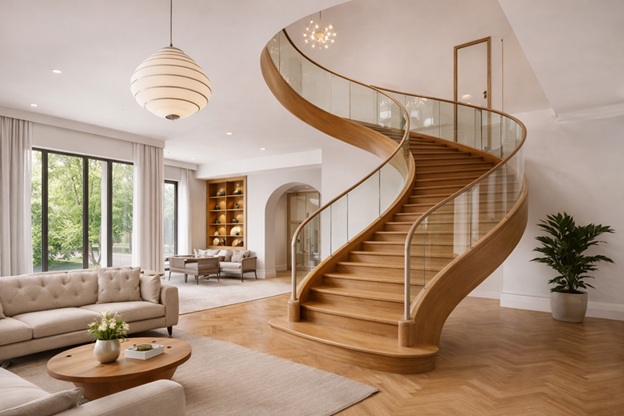
In a duplex home, some elements simply connect spaces, while others define them. A spiral staircase belongs to the latter category. Beyond connecting floors, a spiral staircase serves as a bold, sculptural centrepiece that draws the eye and sets the tone for the entire home. With its fluid curves and seamless movement, it introduces a sense of rhythm and elegance that straight lines rarely achieve. In this article, we’ll discuss how a thoughtfully integrated spiral staircase can redefine how you experience flow, style and continuity within your duplex.
Also Read: Spiral Staircases: Types, Design Considerations, and the Benefits of Engineered Wood
The Enduring Appeal of Spiral Staircases in Duplex Homes
Spiral staircases continue to be a preferred choice in duplex homes as they address two key requirements at once, efficient use of space and a strong visual identity. Unlike conventional staircases that extend across a larger footprint, a spiral layout keeps the connection between levels compact while still creating a distinct architectural presence.
A wooden staircase further enhances this appeal by introducing material warmth and a more natural finish. Compared to metal or glass, wood feels more integrated within residential interiors, especially in homes that prioritise comfort, texture and long-term usability. It allows the staircase to stand out without feeling cold or overly industrial.
Spatial Impact: Movement, Height and Openness
Beyond its appearance, the impact of a spiral staircase is largely defined by how it shapes movement and spatial perception within a duplex.
- Efficient vertical connection: The circular configuration allows movement between floors within a contained area, making it suitable for both compact and open layouts.
- Improved sense of height: The upward rotation naturally draws the eye along the vertical axis, reinforcing the height of the space without additional structural elements.
- Maintains openness in the layout: Since the staircase occupies a defined footprint, surrounding areas remain usable, supporting better circulation across living zones.
Design Directions for Modern Spiral Staircases
Design approaches for a modern spiral staircase today focus on clarity, material balance and refined detailing, allowing the staircase to align seamlessly with the overall interior.
Key design directions shaping spiral stairways include:
- Defined, well-proportioned geometry: Spiral steps are designed with consistent dimensions, creating a form that feels balanced and visually composed.
- Material pairing for contrast: A wooden staircase is often combined with glass or slim metal elements, adding contrast while keeping the structure visually light.
- Understated surface finishes: Matte, satin or brushed finishes are preferred, allowing the texture of the wood to remain visible without excessive sheen.
- Minimal, visually light railings: Contemporary spiral stairways often use glass panels or slim-profile railings, reducing visual interruption while maintaining safety.
Where Spiral Staircases Work Best in Duplex Homes
The placement of a spiral staircase plays a key role in how naturally it fits into a duplex layout. When positioned thoughtfully, it can support movement while also becoming a defining element within the space.
Common placement scenarios where it works particularly well include:
- Central living areas: Placing a wooden staircase at the centre allows it to act as a visual anchor, connecting both levels while remaining accessible from key zones.
- Corner placements: Positioning spiral steps in a corner helps save space, making it a practical choice for compact layouts without compromising usability.
- Near windows or natural light sources: Locating spiral stairways near windows enhances visibility and highlights the material and form through natural light.
- Double-height spaces: A modern spiral staircase works especially well in taller volumes, where its vertical rise can be fully appreciated without feeling constrained.
Styling Interiors Around a Spiral Staircase
A spiral staircase naturally draws attention, so the surrounding interior works best when it supports the form and keeps the overall space visually balanced. The idea is to let the staircase remain a clear focal point while everything around it feels cohesive and well considered.
Key styling considerations around the staircase include:
- Furniture scale and placement: Keep furniture low-profile and well-spaced so the spiral staircase remains visible and the area does not feel crowded.
- Lighting that enhances the form: Soft, layered lighting or a focused pendant above can highlight the curve of a wooden staircase and bring out its natural grain.
- Material and texture continuity: Extend similar wood tones or complementary textures such as linen, stone or soft fabrics to create a cohesive, layered interior.
- Controlled use of decor: A few well-chosen accents around spiral steps help maintain clarity while adding personality to the space.
- Subtle colour coordination: Align the palette with the staircase finish so the interior feels connected and visually resolved.
Planning Considerations for a Well-Balanced Spiral Staircase
A well-designed spiral staircase works best when it is planned in relation to the way the space is used on a daily basis. Beyond its visual role, a few practical considerations help ensure that the staircase feels comfortable, well-aligned and easy to integrate within the layout.
Key aspects to keep in mind include:
- Available floor clearance: Ensure there is enough surrounding space for easy entry and exit, so movement around the staircase feels natural and unobstructed.
- Circulation comfort: The staircase should align with common movement paths within the home, allowing a smooth transition between levels without disrupting daily flow.
- Step proportion and walking ease: The width and rise of spiral steps influence how comfortable the staircase feels in regular use, especially in frequently accessed areas.
- Alignment with the overall layout: The staircase should relate well to adjoining spaces such as living areas or corridors, so it feels intentionally placed within the plan.
- Coordination with flooring finishes: Matching or complementing the staircase material with surrounding flooring helps create a cohesive visual connection across levels.
Care and Maintenance for Wooden Spiral Staircases
A wooden staircase retains its finish and clarity with simple, consistent care, especially given the regular use of spiral steps.
- Routine cleaning: Dust and wipe regularly to prevent surface build-up on spiral steps.
- Surface protection: Use felt pads and avoid dragging objects to minimise surface marks.
- Managing high-use areas: Pay attention to the outer edge of spiral stairways, where foot traffic is typically highest.
- Finish upkeep: Recoat or refresh surfaces periodically to maintain appearance and durability.
Common Mistakes to Avoid
Even well-designed spiral staircases can feel out of place when certain details are overlooked. These are often subtle decisions that influence how naturally the staircase fits within the overall interior.
- Disconnect from the interior palette: When the tone or finish of a wooden staircase does not relate to surrounding surfaces, it can appear visually detached rather than integrated.
- Imbalance in scale and proportion: A staircase that feels oversized or too delicate for the space can disturb the visual balance, making the layout feel unresolved.
- Break in material continuity: If spiral stairways do not connect visually with adjacent flooring or finishes, the transition between areas can feel visually abrupt.
- Overworked detailing: Excessive design elements or heavy ornamentation can take away from the clarity of a spiral staircase, reducing its overall impact.
- Overlooking everyday comfort: Designs that focus only on appearance without considering regular use can affect how comfortable the staircase feels over time.
Also Read: Are Wooden Staircases Worth the Investment?
Discover Premium Staircase Solutions with Mikasa Floors
A well-designed interior comes together when key elements are planned as part of a cohesive whole. At Mikasa Floors, we offer coordinated flooring and wooden staircase solutions that ensure consistency in tone, finish and material expression across the space. Our factory-finished staircase solutions are engineered for precision, delivering refined aesthetics along with long-term durability and ease of installation.
To explore these possibilities, use the Mikasa Visualiser to see how different finishes come together, browse the full range online, or discover options on the Mikasa Floors app, available on both the App Store and Google Play. For personalised assistance, connect with us via the contact form, email info@mikasafloors.com, or call 1800-833-0004.