
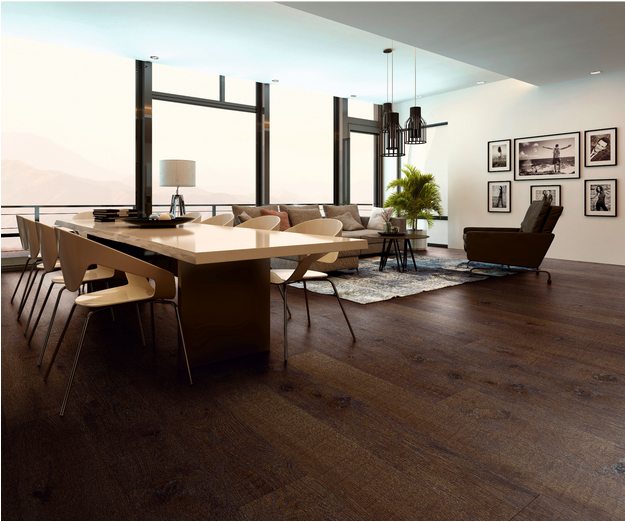
Dark wooden flooring brings a sense of depth, warmth, and quiet luxury to a space, but styling around it requires more than simply choosing the right wall colour. Its rich tones act as a strong visual anchor, influencing how light interacts with the room and how furniture, fabrics and decor come together within it. Creating a well-balanced interior means understanding tonal contrast, knowing when to introduce lighter elements, and using materials and finishes that help keep the space from feeling too heavy. When approached thoughtfully, wooden flooring in darker tones can form the foundation of interiors that feel both cohesive and inviting. To help, in this article, we’ll cover everything you need to style around dark wood flooring, from wall colour and furniture choices to rugs, fabrics and lighting – ensuring every decision helps create cohesive and balanced ambience.
Also Read: Dark Wood Flooring: The Bold Choice for Contemporary Interiors
Dark Wooden Flooring as a Visual Anchor
Dark wooden flooring in finishes such as smoked oak or dark walnut wood brings a sense of depth and structure to a space, naturally forming a strong visual base. Its deeper tone anchors the room, allowing other elements to sit more cohesively and giving the interior a more composed and intentional feel.
How this influences the overall look of a space:
- Perception of depth: Darker, real wood flooring surfaces tend to recede visually, adding depth and creating a more layered spatial experience. This helps the room appear grounded rather than flat.
- Tonal balance: With the floor carrying greater visual weight, lighter walls and restrained materials help restore balance, ensuring the space feels refined without becoming visually heavy.
With this understanding in place, let’s look at how colour choices can be used to build a well-balanced interior around dark wood flooring.
Choosing the Right Wall Colours for Dark Wood Flooring
Dark wooden flooring sets a strong visual base, which makes wall colour an important part of how the overall space is perceived. The right choice can introduce contrast, create a softer transition or build a more immersive atmosphere, depending on the look you want to achieve. Understanding how different colour directions interact with darker tones helps create a space that feels balanced and visually cohesive.
Creating Contrast with Light and Neutral Tones
Light and neutral wall colours work by introducing clarity against darker wooden flooring, allowing the space to feel open while keeping the floor visually grounded. The choice of tone within this palette changes how the space is experienced.
- Warm whites (off-white, ivory, chalk white): These soften the contrast and avoid the starkness of pure white. In a minimal setting, warm white walls paired with darker floors create a calm, continuous surface where the flooring adds depth without feeling dominant.
- Soft beiges and sand tones: Slightly warmer than whites, these bring a subtle richness that works well in spaces aiming for a more relaxed, lived-in aesthetic. The transition between wall and floor feels smoother, making the space appear cohesive rather than sharply contrasted.
- Light taupe and greige: These sit between warm and cool tones, offering a more muted, contemporary look. They reduce visual contrast while still keeping the space light, often used in interiors that prioritise restraint and tonal layering.
- Muted creams: These add warmth without shifting too yellow, helping the room feel comfortable and balanced, especially where the flooring carries deeper undertones.
Building Depth with Mid-Tone and Muted Colours
Mid-tone and muted wall colours create a softer transition against darker wooden flooring, reducing contrast while adding depth to the overall scheme. Instead of lifting the space, these tones blend more gradually with the floor, resulting in interiors that feel calm, layered and visually settled.
- Sage green: A muted, natural green that pairs well with darker floors, bringing in a sense of quiet warmth without overpowering the space. It works particularly well in bedrooms or relaxed living areas where a softer, grounded atmosphere is preferred.
- Dusty blue: Slightly greyed blues introduce coolness while maintaining subtlety. Against dark flooring, they create a balanced contrast that feels composed rather than sharp, often used in contemporary settings.
- Greige: Sitting between grey and beige, greige offers a neutral base that feels more layered than lighter tones. It allows the flooring to integrate seamlessly into the overall palette, making the space feel cohesive and restrained.
Using Deep Colours for a More Defined Interior
Working with deeper wall colours alongside darker wooden flooring requires a more considered approach, as both elements carry visual weight. The outcome depends on how well the space is supported by natural and artificial light and how clearly the overall palette is defined. When handled thoughtfully, this direction can create interiors that feel immersive, composed, and distinctly refined.
- Charcoal tones: Softer than pure black, charcoal creates a continuous visual plane with darker floors, lending the space a more architectural and structured feel. This works well in larger areas where the depth can be appreciated without making the room feel enclosed.
- Deep navy: Rich and controlled, navy introduces depth while maintaining clarity. It pairs well with darker floors to create a quiet, enveloped atmosphere, particularly in spaces designed for comfort and focus.
- Deep green: Forest or olive greens bring in warmth while retaining depth. These tones work well where a more grounded, nature-led palette is desired, allowing the flooring to integrate seamlessly into the overall scheme.
Coordinating Furniture and Materials for Visual Balance
Darker tones in engineered wood flooring create a strong and consistent base, which makes the selection of surrounding elements more deliberate. Furniture and surface finishes need to work with this visual weight so the space feels balanced rather than dense. The focus here is not on adding more, but on placing each element with clarity and purpose.
Key considerations when coordinating furniture and materials:
- Distribute visual weight through furniture form: Bulky, low-set pieces in darker tones can make the space feel compressed. For instance, a deep-toned sofa with a solid base can visually sit heavily on the floor, whereas a lighter upholstered sofa with a slimmer profile helps maintain openness and allows the flooring to remain visible and defined.
- Use legged furniture to maintain flow: Sofas, chairs, and tables with exposed legs keep the floor visually continuous, making the room feel more open. A sofa raised on legs allows more of the flooring to be seen, while a box-style or fully grounded piece tends to interrupt this flow and add unnecessary heaviness.
- Balance matte and structured finishes: Pairing darker floors with a mix of matte and more structured surfaces helps create a controlled, layered look. Too many similar finishes can make the space feel flat, while variation introduces depth without clutter.
- Maintain restraint in material selection: Limiting the number of finishes creates a more cohesive interior. Repeating a few well-chosen materials across the space ensures everything feels connected and intentionally placed.
Softening the Space with Fabrics, Rugs and Layered Decor
Darker wooden flooring creates a strong, grounded base, which makes the introduction of softer elements essential to bring comfort and ease into the space. Fabrics and layered decor help balance this depth, allowing the interior to feel more relaxed and visually settled.
How soft elements shape the overall feel:
- Curtains that soften the edges: Light fabrics such as sheer or linen curtains allow light to pass through gently, reducing the sharpness created by darker surfaces. They help the room feel more open without competing with the flooring.
- Rugs to define and lift the space: Placing a rug over darker flooring breaks the continuity of the surface and introduces a lighter visual layer. This helps create a more comfortable, defined area while preventing the floor from feeling too dominant.
- Layering through textiles: Adding cushions, throws, or upholstered accents introduces subtle variation in texture and tone. This layering brings depth, making the space appear more complete without adding visual clutter.
Lighting Considerations for Dark Wood Flooring
Darker wooden flooring tends to absorb more light, which can influence how bright or enclosed a space feels. A considered lighting approach ensures the depth of the floor enhances the interior without making it visually heavy.
Key lighting considerations:
- Maximise natural light: Larger windows, open layouts, and unobstructed openings allow daylight to spread evenly across the floor, helping the space feel brighter and more open.
- Layer lighting sources: Using a combination of ambient, task, and accent lighting ensures consistent illumination and prevents certain areas from appearing dim.
- Ambient lighting for overall clarity: Ceiling-mounted or concealed lighting establishes a balanced level of brightness across the room.
- Task lighting for specific zones: Floor lamps or table lamps help illuminate corners and functional areas, especially where light may not reach easily.
- Accent lighting to add depth: Focused lighting on walls or architectural details introduces dimension, preventing the space from feeling flat.
Also Read: Light vs Dark Wood Flooring: Which Is Right for Your Space?
About Mikasa Floors
At Mikasa Floors, we offer premium engineered wood flooring solutions that combine the authenticity of real wood flooring with the precision and reliability of advanced engineering. Our floors are designed as complete surface solutions, bringing together aesthetics, stability, and long-term performance for modern interiors.
Our range includes a variety of wood species such as oak, walnut, and teak, available in multiple formats including long planks and engineered wood herringbone. Each plank features a natural wood veneer, enhanced with pre-finished protective coatings that improve durability while retaining the character of real wood. With our PlankLoc® installation system, we ensure faster, more precise installation with a clean, seamless finish.
We focus on delivering flooring that performs consistently across different environments, with constructions engineered to minimise movement and maintain surface integrity over time. Whether used in residential or commercial spaces, our floors are crafted to support cohesive, well-balanced interiors while meeting global quality standards. To learn more about our products or explore suitable options for your space, you can call us at 1800 833 0004, email us at info@mikasafloors.com, or visit our contact us page.